Saxony / Dresden (Reichenbach im Vogtland)
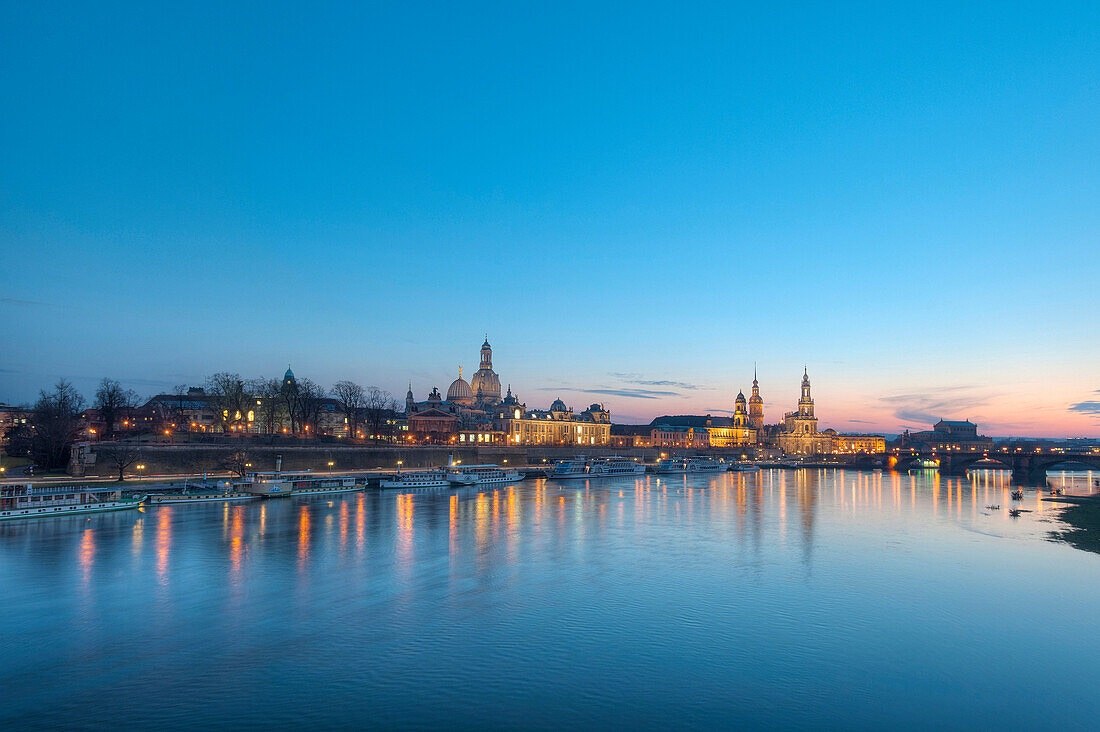
Saxony is in eastern Germany, bordering the Czech Republic and Poland, known for its elegant cities (Dresden, Leipzig), charming villages, and the forested Ore Mountains (Erzgebirge), dotted with palaces and castles (source: Ulcek final PPT.pdf). It is the homeland of Jerry's maternal Fiedler / Graebner line. See Jerry's Family History (Ulcek / Fiedler).
Family connection
Paul Fiedler was born in Saxony and emigrated to the US at age 9 in 1881 — travelling with his mother and siblings (Emma 12, Ernst 6, Paul 9, Moritz 5), departing Bremen and arriving December 1881. He settled in Caledonia (Racine County), WI, ran a creamery, and married Emma Becker in 1897. His parents were Franz Herman Fiedler and Bertha (née Graebner); her 1923 obituary (d. 28 Dec 1923, Town of Lake, Milwaukee, at age 79) names all her children and confirms the family came from Saxony (source: Ulcek final PPT-notes.pdf).
Several sibling records localize the origin within Saxony — brother Ernst's 1900 marriage record states he was born in Reichenbach, Saxony, and sister Flora's death certificate gives a phonetic "Rickenbach." There are, however, two (and more) places named Reichenbach in Saxony — Reichenbach im Vogtland and Reichenbach/Oberlausitz (O.L.). Given the birthplaces of Paul's grandparents and great-grandparents, the research concludes Reichenbach im Vogtland is the most likely — though this is not fully confirmed (source: Ulcek final PPT-notes.pdf).
What to see
- Göltzsch Viaduct (Göltzschtalbrücke) — near Reichenbach im Vogtland, the world's largest brick bridge, built 1846–1851 (some 26 million bricks) to carry the Leipzig–Nuremberg railway across the deep Göltzsch valley (source: Ulcek final PPT-notes.pdf). Reichenbach itself (first mentioned 1212) industrialized in the 19th century around textiles, mechanical engineering and the railway, and sits near the Vogtland's spa towns and hiking country (source: Ulcek final PPT-notes.pdf).
- Dresden — Baroque capital; the Taschenbergpalais Kempinski, a palace hotel beside the Zwinger, is suggested as a place to stay (source: Ulcek final PPT.pdf).
- Görlitz, Leipzig, and the Zittau mountains (source: Ulcek final PPT.pdf).
- Seiffen — Ore Mountains town devoted to wooden Christmas handicrafts year-round (source: Ulcek final PPT.pdf).
- Christmas markets — Saxony is called Germany's "Christmas heartland"; the Dresden Striezelmarkt dates to 1434 (source: Ulcek final PPT.pdf).
Why so many Saxons emigrated
The research frames the family's departure in Saxony's wider story: a once-powerful Electorate (the Wettin court at Dresden, the cradle of Luther's Reformation, Meissen porcelain) that became a kingdom under Napoleon in 1806, was punished at the 1815 Congress of Vienna (losing ~40% of its land and people to Prussia), then industrialized hard in the 19th century ("the Saxon Manchester"). The countryside lagged: land shortages, the "Hungry Forties" potato blight, the crushed 1848–49 Dresden uprising, and post-1866 Prussian conscription drove waves of emigrants — including Lutheran communities — to Wisconsin, Ohio and the Midwest (source: Ulcek final PPT-notes.pdf).
Bonus excursion in Christy's research
Christy's research pairs Saxony with a Saxon & Bohemian Switzerland road trip along the Germany–Czechia border — Königstein Fortress, the Bastei Bridge, Bad Schandau, and across into Czechia at Hřensko, the Pravčická Gate and Jetřichovice — framed as a "bonus trip connection from Dresden to Czech[ia]" that also bridges toward the Ulcek family's Moravia (source: Ulcek final PPT-notes.pdf). See Saxon & Bohemian Switzerland (the Dresden → Czechia bonus road trip) for the full route.
Trip fit
Planning note (not from the sources): Saxony is in far-eastern Germany, well off the Champagne–Alsace corridor — a substantial separate leg, relevant only if the trip extends deep into eastern Germany (where it would chain naturally with Freyburg & the Saale-Unstrut (Leißling / Naumburg) and the Bohemian Switzerland bonus).