The Zagelow Branch (genealogical puzzle)
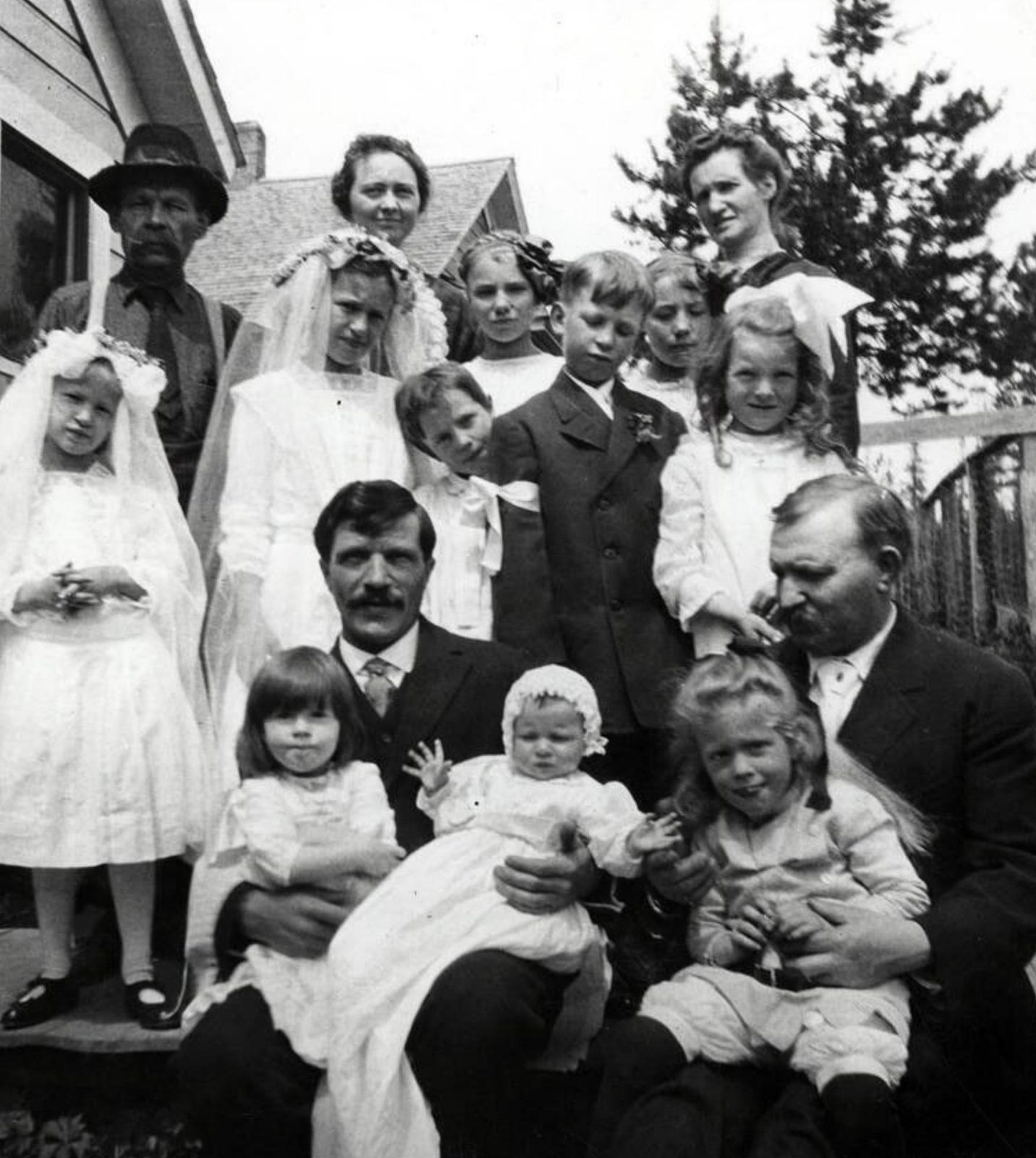
Herman Zagelow (Mary's great-grandfather, husband of Marie Theresa Groh) was reportedly born in "Alsace-Lorraine" in 1858, with his own father from East Prussia (source: Holley Family Tree.ged). The heritage report investigates this directly and reaches an honest, contrary conclusion: the Zagelow branch most likely is not Alsatian at all (source: mary-heritiage-alsace.md). This revises the earlier reading in Mary's Family History that treated Herman as Alsatian.
Why the Alsatian label is doubtful
- The surname is northeast-German, not Alsatian. "Zagelow" is a Slavic-German toponymic "-ow" name of the Pomerania / Mecklenburg-Vorpommern / East Prussia type; Alsatian surnames are Alemannic-Germanic or French (source: mary-heritiage-alsace.md).
- It is absent from all Alsatian records. No instance of "Zagelow" appears in any Bas-Rhin état civil (Geneanet and FamilySearch null results) (source: mary-heritiage-alsace.md).
- The distribution fits a single Prussian emigrant family. Forebears.io places the US Zagelows mostly in Idaho (24%), Wisconsin, Oregon, plus Germany (13%) — matching the family's known emigration to Idaho (Herman is buried in Moscow Cemetery, Latah County, Idaho; d. 1933) (source: mary-heritiage-alsace.md).
- The chronology breaks. 1858 is 13 years before the 1871 German annexation of Alsace-Lorraine — so a birth "in Alsace" in 1858 would be in French Alsace, requiring an East-Prussian father to migrate to French Alsace before annexation (unusual). The leading hypothesis: "Alsace-Lorraine" is an Americanized/loose label for what was really a Prussian/Pomeranian birth (source: mary-heritiage-alsace.md).
- The family was Roman Catholic, which (if Prussian) points to a Catholic enclave such as Ermland/Warmia in East Prussia rather than Protestant Pomerania. A specific "village of Zagelow near Demmin," and the suggested "Żelewo" equivalence, could not be confirmed — treat them as unverified (source: mary-heritiage-alsace.md).
The documented US records (new leads)
The speaker-notes edition of Christy's presentation supplies exactly the US-side records this page calls for — concrete leads that can resolve the Alsace-vs-Prussia question (source: Holley-family-notes.pdf):
- Herman and Marie both emigrated in the late 1800s, married in Washington State, where their daughter (Mary's grandmother, Marie Anne Zagelow) was born; the family later moved to Idaho (source: Holley-family-notes.pdf).
- Homestead patents: Herman and his brother each received 160 acres in Washington under the 1862 Homestead Act (US General Land Office records) (source: Holley-family-notes.pdf).
- 1900 US Census: Herman's brother William Zagelow is listed with him; the census gives an emigration year of 1884 for Herman (his father said to follow ~1885) (source: Holley-family-notes.pdf).
- Herman's parents are recorded as Frederick William "John" Zagelow and Louisa Allen Lueck (source: Holley-family-notes.pdf).
- 1920 US Census (Idaho): Herman worked as a schoolhouse janitor; daughter Marie, 16, was a store clerk (source: Holley-family-notes.pdf).
> Source-framing note. Christy's deck presents Herman within the Alsatian emigration story (1871 annexation, conscription, the phylloxera shock — see Mary's Family History), reflecting the original "Alsace-Lorraine" record. The later heritage report (Mary's Family History / mary-heritiage-alsace.md) revises that to a Prussian/Pomeranian origin. The US records above don't settle it on their own, but a 1900/1910/1920 census birthplace for Herman's parents, plus his Idaho death certificate and any naturalization papers, should — which is why this page leads with them (source: Holley-family-notes.pdf; mary-heritiage-alsace.md).
Research path (US records first)
1. US-side first to resolve Alsace-vs-Prussia: Herman's Idaho death certificate (d. 1933, Latah County), the 1900/1910/1920 US censuses (parents' birthplaces + immigration year), naturalization papers, and ship passenger manifests (source: mary-heritiage-alsace.md). 2. If an Alsatian search is still warranted, the highest-probability place is Strasbourg (garrison/industrial hub with German-speaking migrants) — search its population registers (1795–1870; fichiers domiciliaires 1870–1940) and the 1856/1861/1866 Bas-Rhin censuses; secondarily Bischwiller or Mulhouse (source: mary-heritiage-alsace.md). 3. Check optant records of 1872 (residents choosing French nationality after annexation) and military recruitment registers (source: mary-heritiage-alsace.md). 4. German-side, once a town is suspected: Meyers Gazetteer (wildcard "Zag"/"agelow"), Kartenmeister, and Catholic parish records of Ermland/Warmia (source: mary-heritiage-alsace.md).
> Contrast with the Groh/Wohlfrom line: those branches are firmly, documentarily Alsatian (Marlenheim/Kirchheim) — see Groh / Wohlfromm Family of Marlenheim. The Zagelow puzzle is a separate, off-trip project; East Prussia today is divided between Poland and Russia (Kaliningrad) and is not reachable on this itinerary.