Alsace Grape Varieties
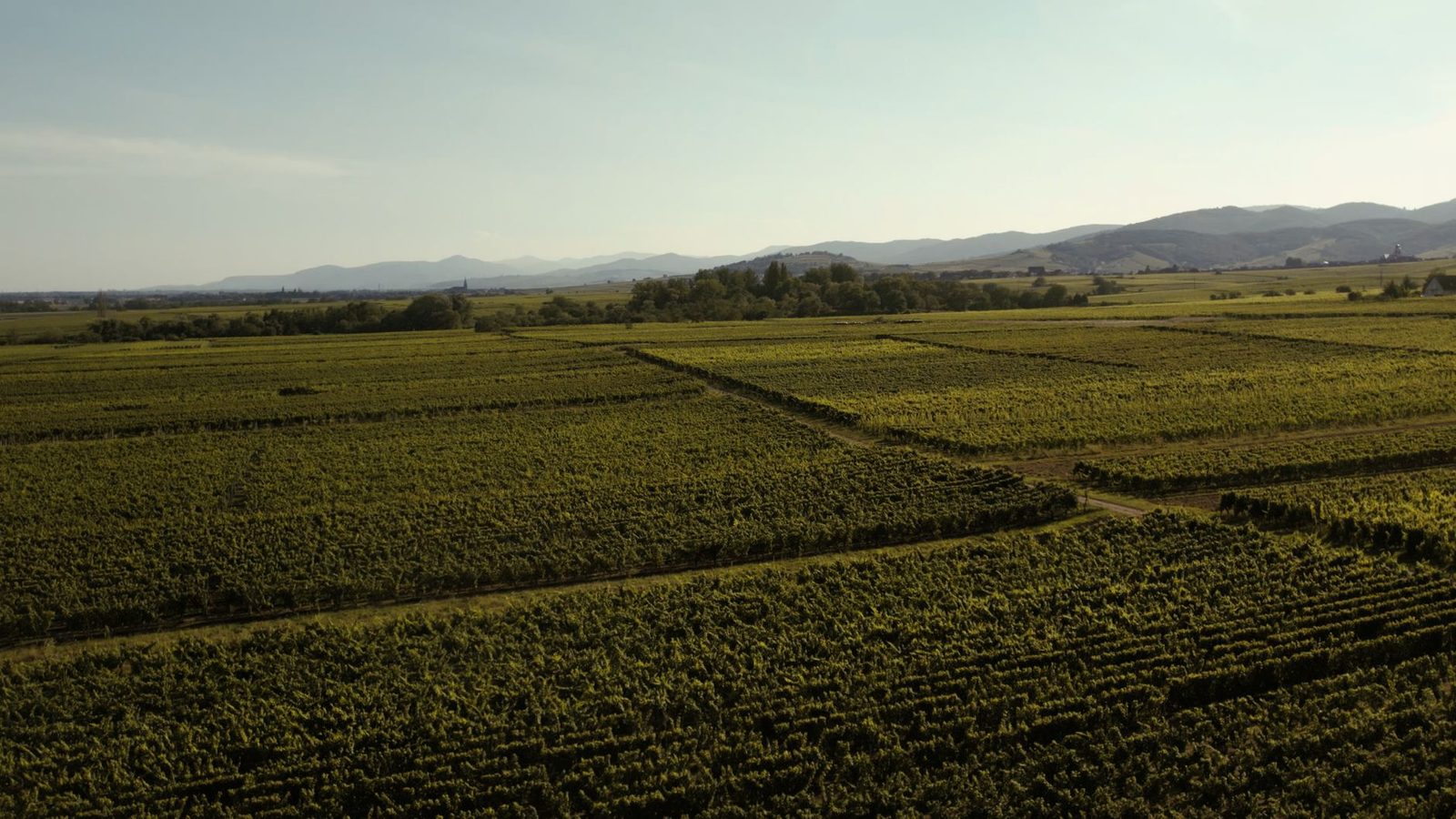
Alsace is overwhelmingly a white-wine region and, uniquely in France, labels its wines by grape variety rather than place (source: compass_artifact_wf-755602f0...). The wines are aromatic, floral, and spicy, with little or no oak, so they tend to be very varietally pure (source: Alsace Wine Route by Car – Itinerary & Map.md). Most still wines come in the tall, slender "flûte d'Alsace" bottle (source: compass_artifact_wf-755602f0...).
The seven grape varieties
- Riesling — the "king" of Alsace; dry, steely, mineral, high-acid, among the world's most age-worthy whites (source: compass_artifact_wf-755602f0...)
- Gewürztraminer — intensely aromatic (lychee, rose, spice); full-bodied, low acidity, dry to sweet (source)
- Pinot Gris — rich, often off-dry, smoky/honeyed (source). Wine Folly singles out Alsatian Pinot Gris among its 35 classic European wines: a peachy, off-dry style "in a league of its own — Alsace has no competition with this wine," unlike the dry Italian Pinot Grigio made on the other side of the Alps (source: European Wine Exploration Map _ Wine Folly.pdf)
- Pinot Blanc — soft, easygoing everyday white, notably from Turckheim (source: compass_artifact_wf-755602f0...; The Ultimate Alsace Wine Route Itinerary ⭐️ 2026 Map.md)
- Sylvaner — light, fresh, underrated and reemerging (source: compass_artifact_wf-755602f0...)
- Muscat — dry, grapey, floral; e.g. bought at Dopff au Moulin in Riquewihr (source: compass_artifact_wf-755602f0...; Alsace Wine Route by Car – Itinerary & Map.md)
- Pinot Noir — Alsace's only red grape; pale reds and rosés, increasingly serious; also used for Crémant d'Alsace (source: compass_artifact_wf-755602f0...)
Chasselas and Auxerrois are sometimes added to the count of permitted varieties (source: compass_artifact_wf-755602f0...).
Grand Crus
Alsace has 51 classified Grand Crus — see Alsace Grand Cru for the system and rules. Named across sources: Frankstein (Dambach-la-Ville), Altenberg (Bergheim), Eichberg and Pfersigberg (Eguisheim), Schlossberg and Brand (Kaysersberg/Turckheim), Zotzenberg (Mittelbergheim, Sylvaner), Rangen de Thann (volcanic), Schoenenbourg, and Rosacker (source: The Ultimate Alsace Wine Route Itinerary ⭐️ 2026 Map.md; Alsace Wine Route by Car – Itinerary & Map.md; compass_artifact_wf-755602f0...).