French Wine Tour — Travel Planning Trier · Rhineland-Palatinate
The route →
Home / Family / Trier
City · Mosel, Germany

Trier

Germany's oldest city — Roman UNESCO monuments, Mosel Riesling and Viez cider, and Jerry's Maas/Fox ancestral hub on the Champagne–Alsace corridor.
Founded 16 BC · Augusta TreverorumUNESCO Roman monuments (1986)Heritage Maas / Fox line
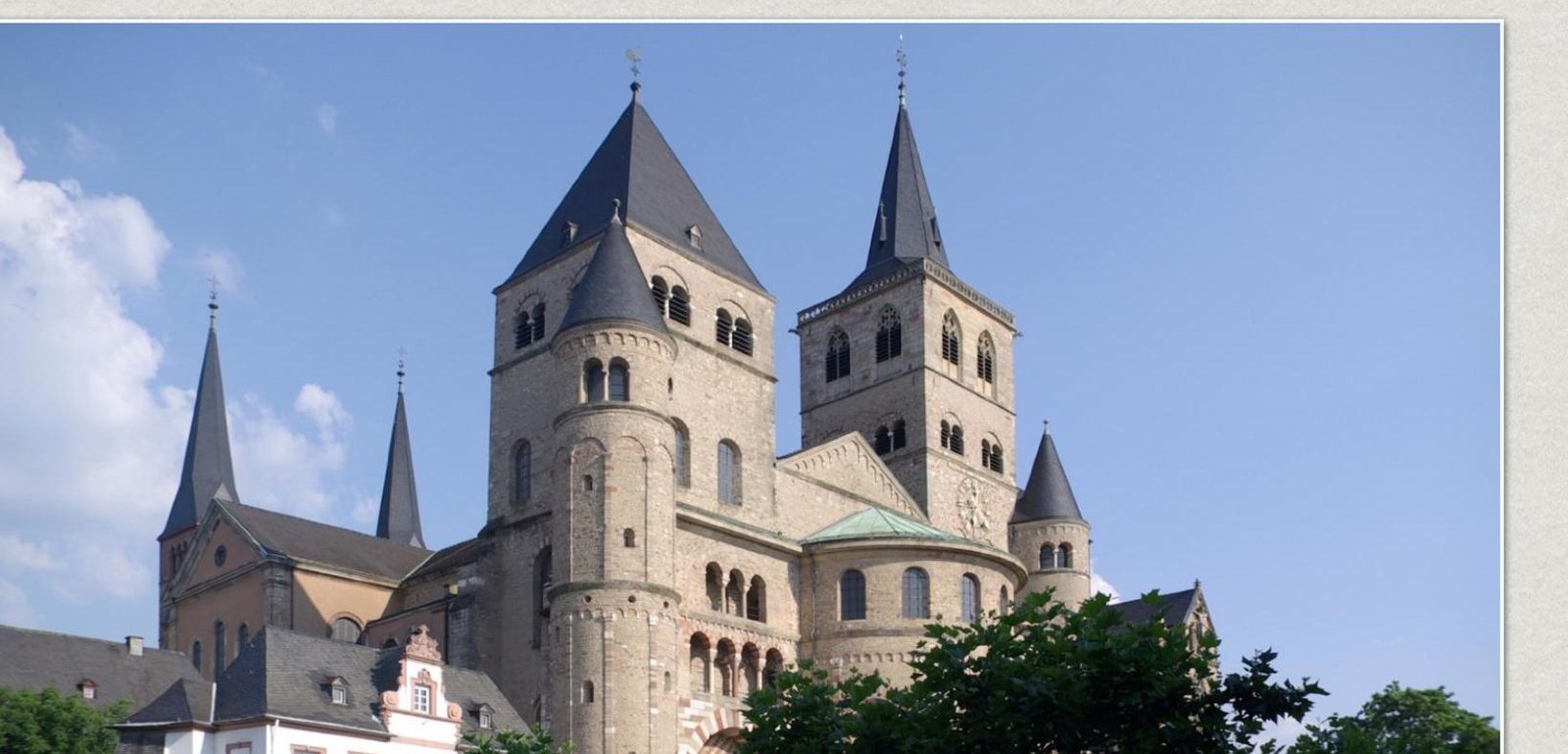
La cathédrale de Trèves (Trierer Dom)
Founded
16 BC
Roman Augusta Treverorum
UNESCO
Since 1986
The Roman monument ensemble
Wine
Mosel Riesling
Plus Viez apple cider (UNESCO 2024)
Heritage
Maas / Fox
Jerry's archival hub

The city

Trier sits at the heart of the Mosel Valley near the Luxembourg border — celebrated as Germany's oldest city, founded by the Romans as Augusta Treverorum (16 BC) and a UNESCO World Heritage site since 1986 (source: Ulcek final PPT.pdf; trier-germany-research.md). The Roman ensemble — Porta Nigra, Imperial Baths, Amphitheatre, Aula Palatina and the Roman Bridge — plus the Cathedral are walkable from the centre, and the Rheinisches Landesmuseum holds the Trier Gold Hoard and the best mosaics north of the Alps (source: trier-germany-research.md).

For Jerry, this is the family hub of the Maas / Fox (Fuchs) line and the natural archive centre (the Bistumsarchiv Trier) for the whole Saarland/Mosel corridor (source: jerry-alsace.md). The city is genuinely car-free friendly — a 46-minute train reaches Luxembourg City — and pairs Roman heritage with Riesling country: the Olewig wine district and in-town cellars are minutes away. See Jerry's Family History (Ulcek / Fiedler).

What to see
  • 01Porta NigraThe best-preserved Roman city gate north of the Alps (c. 170 AD).
  • 02Cathedral & LandesmuseumGermany's oldest cathedral; the Trier Gold Hoard and Roman mosaics.
  • 03Kaiserthermen & AmphitheatreImperial Baths with underground passages; a c. 170 AD arena.
  • 04Karl Marx HouseThe Baroque birthplace of Karl Marx, now a museum.
  • 05Olewig & the WeinkulturpfadVineyard-ringed wine district and a free vineyard trail.
Eat, taste & stay
Jerry's heritage

The Maas / Fox homeland & the corridor's archive hub

Trier is the documented family hub for Jerry's Maas / Fox (Fuchs) line, alongside Orscholz and Freudenburg in the Trier district, and the natural archive centre — the Bistumsarchiv Trier holds the Catholic parish records for the whole Saarland/Mosel corridor.

Our notesRoman city, Riesling country

Germany's oldest city packs a walkable Roman UNESCO core, the Mosel's wine culture and Jerry's family archives into one compact, car-free-friendly stop on the Champagne–Alsace corridor.

Mapped as an optional +2-day detour.

§From the wiki

Trier sits at the heart of the Mosel Valley on the Moselle River near the Luxembourg border. Christy's research flags it as the family hub for the Maas / Fox (Fuchs) branch alongside the nearby villages of Orscholz and Freudenburg (source: Ulcek final PPT.pdf). The GEDCOM records John Fox (Fuchs) Sr. born at Orscholz/Saarburg and Anna Maas (Mauss) born at Freudenburg, both in the Trier district (source: Ulcek Family Tree.ged). See Jerry's Family History (Ulcek / Fiedler).

Family connection

This is one of Jerry's documented German homelands. The Fox/Fuchs and Maas/Mauss forebears came from the cluster of Trier, Orscholz, and Freudenburg (source: Ulcek final PPT.pdf). An 1880 census lists the family in Mosel, spelled "Fuchs" (source: Ulcek final PPT.pdf).

What to see

  • Porta Nigra ("Black Gate") — the Roman city gate, built around 170 AD (source: Ulcek final PPT.pdf).
  • Roman amphitheater — a 2nd-century AD arena that once seated about 22,000 and now hosts open-air concerts (source: Ulcek final PPT.pdf).
  • Trier Christmas Market — described as one of Germany's most atmospheric, set between the cathedral and the medieval market square (source: Ulcek final PPT.pdf). Seasonal — relevant for a December/Christmas-market trip.

Trier is celebrated as Germany's oldest city (source: Ulcek final PPT.pdf). A heritage-research report adds detail: founded by the Romans as Augusta Treverorum (16 BC), a Roman imperial capital and a UNESCO World Heritage site since 1986. The Porta Nigra's oak timbers are dendro-dated to felling in winter 169/170 AD, confirming construction began 170 AD under Marcus Aurelius. The full Roman ensemble (Porta Nigra, Imperial Baths, Amphitheater, Barbara Baths, Aula Palatina/Basilica of Constantine, Roman Bridge) plus the Cathedral of St. Peter and Church of Our Lady are walkable from the center; the Rheinisches Landesmuseum holds the best mosaics. Buy the combined AntikenCard. Also: the Karl Marx House and a lively old town and Hauptmarkt (source: jerry-alsace.md).

Further detail from the travel research (source: trier-germany-research.md):

  • Porta Nigra — the largest, best-preserved Roman city gate north of the Alps, built from roughly 7,200 sandstone blocks; €€ admission.
  • Konstantinbasilika (Aula Palatina) — Constantine's vast throne hall, the largest known surviving interior from antiquity, now a Protestant church (free).
  • Kaiserthermen (Imperial Baths) — monumental 4th-century baths with explorable underground passages.
  • Trier Amphitheatre — c. 170 AD arena (~18,000 capacity), arena cellars open to visit.
  • Rheinisches Landesmuseum — the biggest mosaic collection north of the Alps and the Trier Gold Hoard: the largest preserved Roman gold hoard worldwide — 2,516 gold aurei (~18.5 kg), buried 196 CE, found in 1993.
  • Karl Marx House — the Baroque birthplace of Karl Marx (born 5 May 1818), now a museum (€7 adult; closed Mondays mid-Nov to mid-March). Look too for the quirky Karl Marx Ampelmännchen pedestrian signal.
  • The AntikenCard (from €12 basic / €18 premium) bundles several Roman monuments plus the Landesmuseum — good value across multiple sites.

Wine & cider in the city. The Olewig district, a vineyard-ringed city neighbourhood of family wineries and taverns (host of the August Wine Festival), is a 10-minute drive or short bus from the centre; the free 1.6 km Weinkulturpfad trail runs from above the Amphitheatre down to its taverns. Trier is also a home of Viez, the regional apple cider (5–7% ABV), added to UNESCO's Intangible Cultural Heritage list in 2024 and celebrated at the annual Viezfest; the Viezstraße is a 150 km themed cider route through orchard villages (source: trier-germany-research.md).

The archival hub

Trier is the natural archive center for Jerry's whole Saarland/Mosel corridor: the Bistumsarchiv Trier (Jesuitenstraße 13c, 54290 Trier; Bistumsarchiv@bgv-trier.de) holds Catholic parish records for the diocese, covering the Saarland villages, Freudenburg, and the Mosel/Saar wine villages, with finding aids like the Kirchenbuch-Inventar 1570–1798 (source: jerry-alsace.md). It is the single most important contact for the Maas/Fox line. See Orscholz & Freudenburg (Saarland / Trier) and Bernese-Anabaptist Resettlement in Alsace (the "Wohlust" research question).

Wineries (Saar & Mosel)

Trier sits between two of the world's great Riesling districts (source: jerry-alsace.md):

  • Saar (~30–40 min south): steep-slate Rieslings. Weingut Egon Müller – Scharzhof (Wiltingen) is the "godfather of Saar Riesling" — its 2003 Scharzhofberger TBA sold for €12,000 net per bottle in 2015 (Germany's most expensive wine); visits are exclusive. More visitor-friendly: Van Volxem (Wiltingen), Weingut Peter Lauer (Ayl), Dr. Wagner and Forstmeister Geltz-Zilliken (Saarburg), von Othegraven (Kanzem).
  • Mosel (~40 min NE around Bernkastel-Kues): Dr. Loosen (Bernkastel), Markus Molitor (Wehlen), Julian Haart (Piesport). In Trier: the Reichsgraf von Kesselstatt wine bar by the cathedral.

In-town cellars (easiest to visit):

  • Weingut Vereinigte Hospitien — home to Germany's oldest wine cellar, a Roman-era vault on the Moselle waterfront; tastings by appointment (source: trier-germany-research.md).
  • Bischöfliche Weingüter Trier — a 30,000 m² Late-Antique cellar with guided cellar walks (~€32, Sekt + 3 Rieslings) and moderated tastings (~€25, 6 wines) (source: trier-germany-research.md).
  • In Olewig, family wineries like Peter Terges, Deutschherrenhof and BECKER'S (below) offer walk-in tastings, Flammkuchen and estate dinners (source: trier-germany-research.md).

Make appointments — small estates run on tiny staff — and never drink and drive. See Mosel Valley.

Where to stay & eat

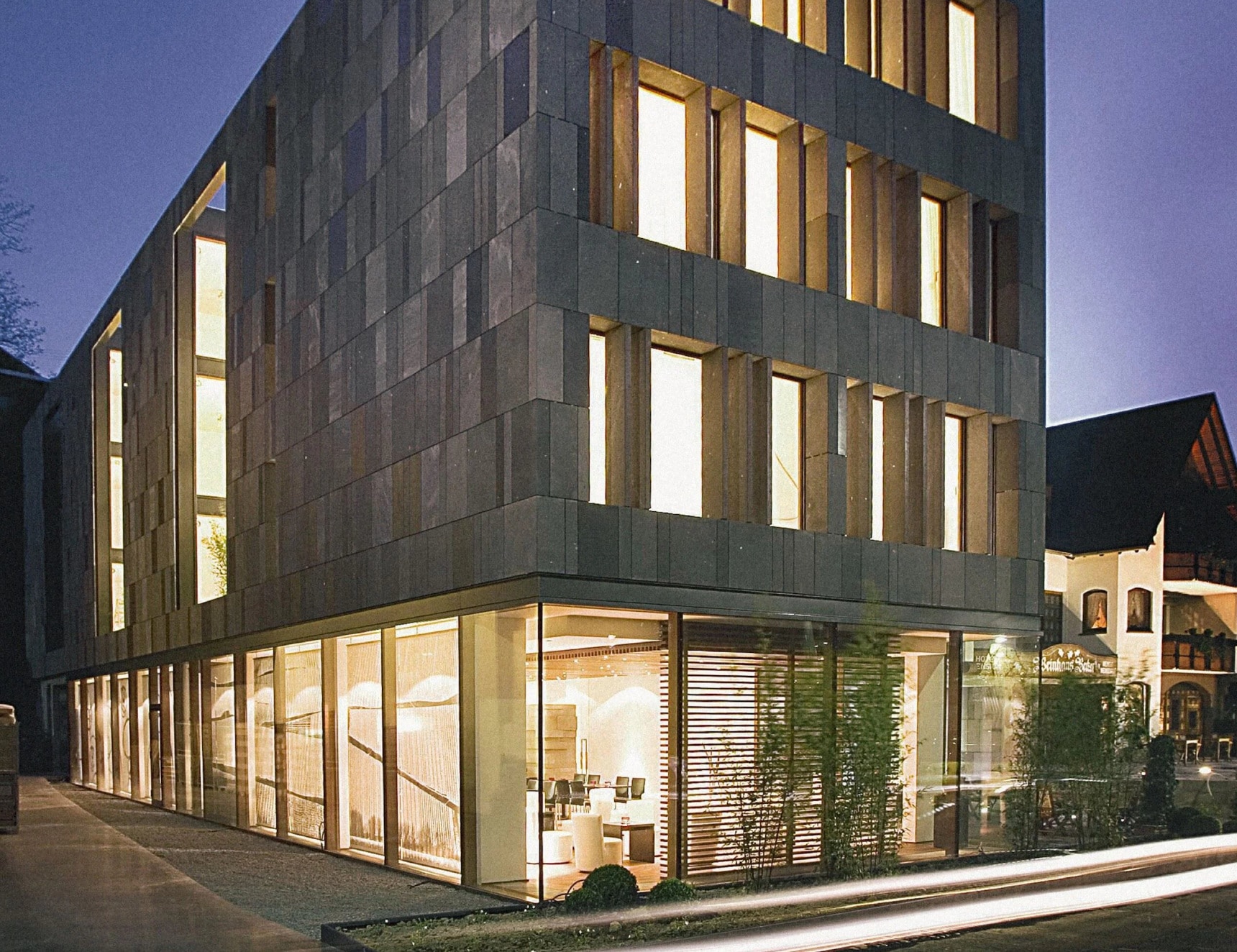
  • BECKER'S Hotel & Restaurant (Olewiger Str. 206, Olewig wine district, ~3 km from the old town) — a design hotel with a working vineyard (the Becker family are fifth-generation winemakers) and a gourmet tasting-menu restaurant (chef-winemaker Wolfgang Becker). The standout special-occasion choice (~€210 junior suite; reserve the table when you book the room). Its Weinhaus offers near-the-same quality more relaxed (source: jerry-alsace.md).
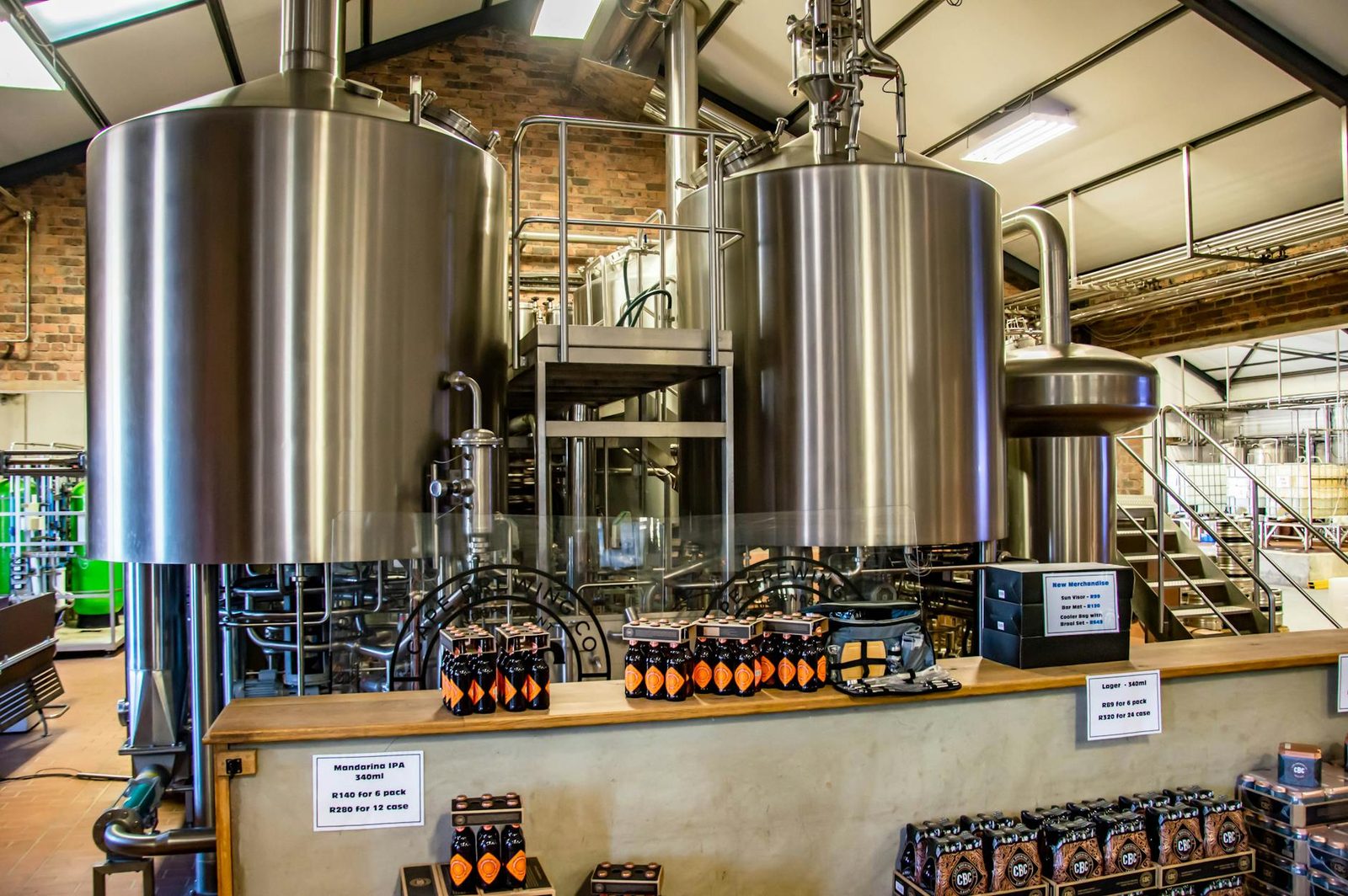
  • Blesius Garten (Olewiger Str. 135, Olewig) — a family-run 4-star in a historic estate with a spa and Kraft Bräu, Trier's first microbrewery (since 1998; the European-Beer-Star-winning "Seb's Pale Ale") — the relaxed wine-and-beer base on the city's vineyard edge (source: trier-germany-research.md).
  • Center options near the Porta Nigra abound (Mercure Porta Nigra, Hotel zum Christophel; the boutique Romantik Hotel zur Glocke). Recommended as the base for 2 nights. Other dining: Weinstube Kesselstatt by the cathedral, the special-occasion Schlemmereule opposite the Cathedral, the Bitburger Wirtshaus beer hall, and Klosterschenke Pfalzel in a former monastery (source: jerry-alsace.md; trier-germany-research.md).

> BECKER'S Michelin status — sources disagree. The Ulcek-corridor report (above) described BECKER'S as two-Michelin-star (source: jerry-alsace.md). The newer travel research says the rating has fallen: 2 stars historically, reduced to 1 (2021–2025), and it lost its last star in the most recent guide, with reviews flagging inconsistent value (source: trier-germany-research.md). Treat the most recent guide (zero stars) as the current best estimate and reconfirm before booking. The food and setting remain the city's standout regardless. See BECKER'S (Hotel · Restaurant · Weingut).

Trip fit

Trier lies north of the Épernay→Strasbourg corridor near Luxembourg, making a Champagne → Trier/Mosel → Alsace arc geographically coherent and on-theme. It is mapped as an optional +2-day car-free detour in 12-Day Public-Transit Itinerary: Champagne · Alsace · Burgundy: Épernay → Metz → Trier (~3.5–4h), then Trier → Saarbrücken → Strasbourg (~4h). All Roman sights are walkable from Trier Hbf.

Getting there & around

Trier is genuinely car-free friendly — the Roman monuments, old town, restaurants and wine bars cluster in a compact pedestrian core, and a car is optional, not required (source: trier-germany-research.md):
  • Rail: Trier Hauptbahnhof (~10-min walk from the old town) runs direct to Luxembourg City in as little as 46 min (~21 trains/day, CFL/DB), plus Moselle lines toward Koblenz/Cologne, Saarbrücken and Frankfurt. Day-trip down the Moselle to Bernkastel-Kues, Cochem or Saarburg (source: trier-germany-research.md).
  • Air: nearest is Luxembourg Airport (Findel, LUX), ~25 km (~25 min by car; direct bus or train via Luxembourg). Also Frankfurt-Hahn, Saarbrücken, Frankfurt Main, Cologne/Bonn (source: trier-germany-research.md).
  • Local: SWT/Stadtwerke Trier buses (24-hour day ticket) reach the outlying sights; the farthest core sight, the Amphitheatre, is ~1.5 km from the station. Uber (taxi-hailing model) and Bolt both operate, though traditional taxis are most reliable (source: trier-germany-research.md).
  • Bike: Trier sits on the Mosel Cycle Path (Moselradweg) with ~100 hire/service points; bikes ride free on DB Regio in Rhineland-Palatinate after 9 a.m. weekdays and all day weekends (source: trier-germany-research.md).
  • Car: no low-emission (Umwelt) zone, so no sticker needed; a parking-guidance system directs to central garages. Most useful for the wider Moselle valley, the Viezstraße and cross-border trips (source: trier-germany-research.md).

Related pages